Cooling and soothing with R O S E
Its fragrance alone carries something ancient and immediate. Rose has been gathered, dried, distilled, and admired for thousands of years. What rose does for the body: it cools, clarifies, and tends to what has become too heated.
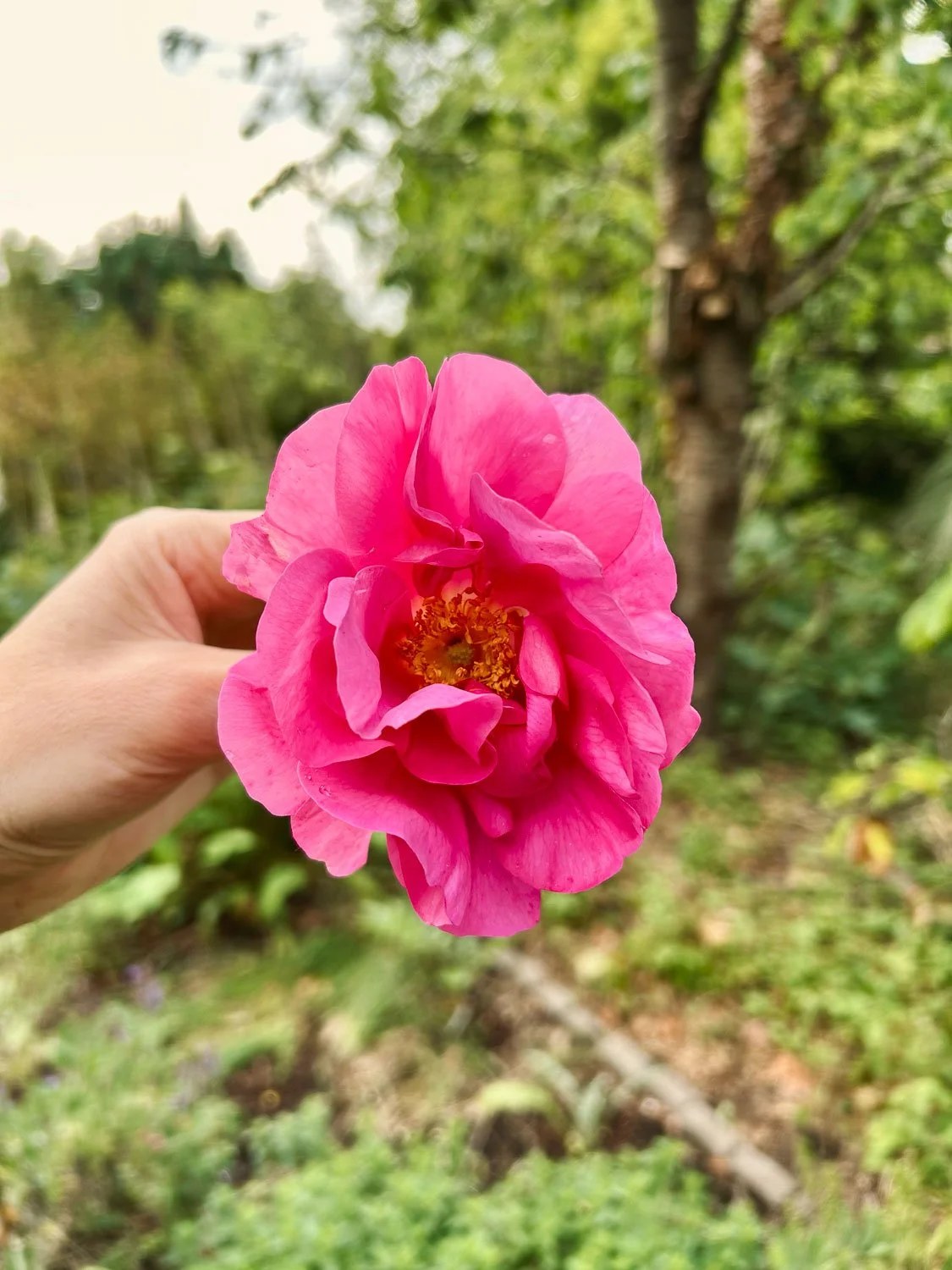
In Ayurveda, summer is the season of Pitta — the dosha of fire and transformation. A season of ripeness and intensity, of long light and outward moving energy. And yet that same fire, when it accumulates beyond what is useful, shows itself in the body and mind: irritability, inflammation, restlessness, a kind of over-sharpness. Rose is one of the most direct remedies classical Ayurveda offers for exactly this.
A cooling essence
In the ancient texts, rose — Śatapatrī, the hundred-petaled flower — is classified as a Sita Virya herb. Sita means cold. Its virya, or potency, is inherently cooling, placing it among the clearest Pitta-balancing herbs in the tradition. It is also described as Hridaya — heart-tending — a quality that sets it apart. Few herbs act on both the physical and emotional body so directly. Rose belongs to several overlapping classical categories: the heart tonics (hridya dravyas), the herbs that support mental clarity (medhya rasayanas), and the herbs that nourish and refine the skin (twachya). It helps build the subtle essence underlying immunity, radiance, and resilience — called Ojas.
Tasting rose
Rose carries three tastes: sweet, astringent, and slightly bitter. Its post-digestive effect is sweet, which means it nourishes the first two tissues, plasma and blood. These are among the first to be disturbed by Pitta excess: skin flares, sensitivity, a dullness in the complexion. Rose tends to all of these. Its Prabhava — its special action — is its capacity to support mental clarity and ease. This is why rose has been used for headache, emotional heaviness, and the low-grade agitation that often accompanies an overstimulated nervous system. Recent research adds another layer: rose scent has been shown to increase gray matter in brain regions linked to memory — areas that tend to diminish in Alzheimer's disease.
In practice
In summer there are a few simple things you can do with rose to cool and support yourself.
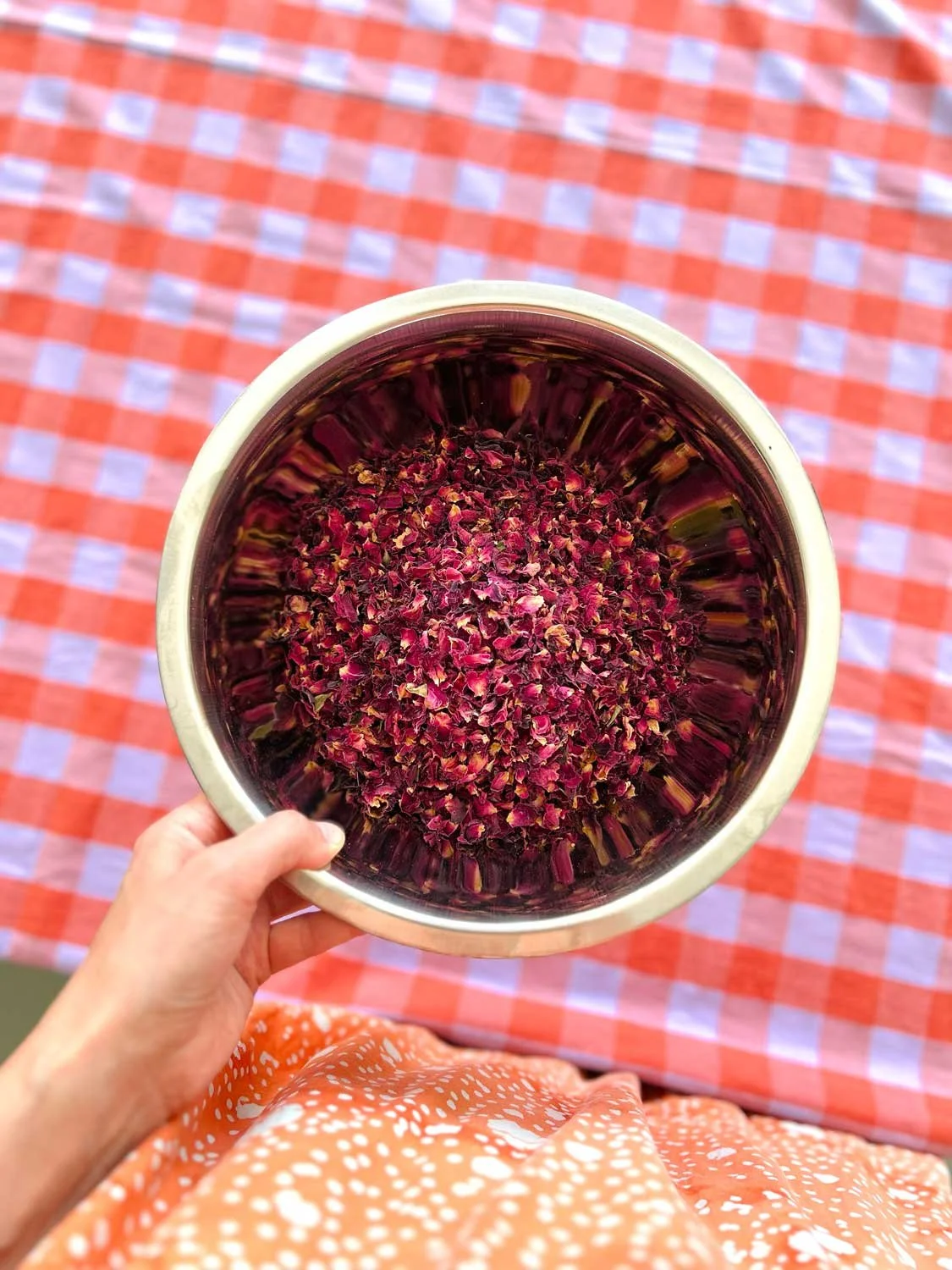
Rosewater — use a food-grade variety —
· A teaspoon stirred into a glass of water soothes Pitta gently from within.
· Two cotton pads soaked in rosewater and placed over the eyes bring immediate relief to heat and tension held in the head region.
· A light spritz on the face cools and resets, mid-afternoon or whenever the day has become too much.
In my webshop, rose appears in two beautiful forms:
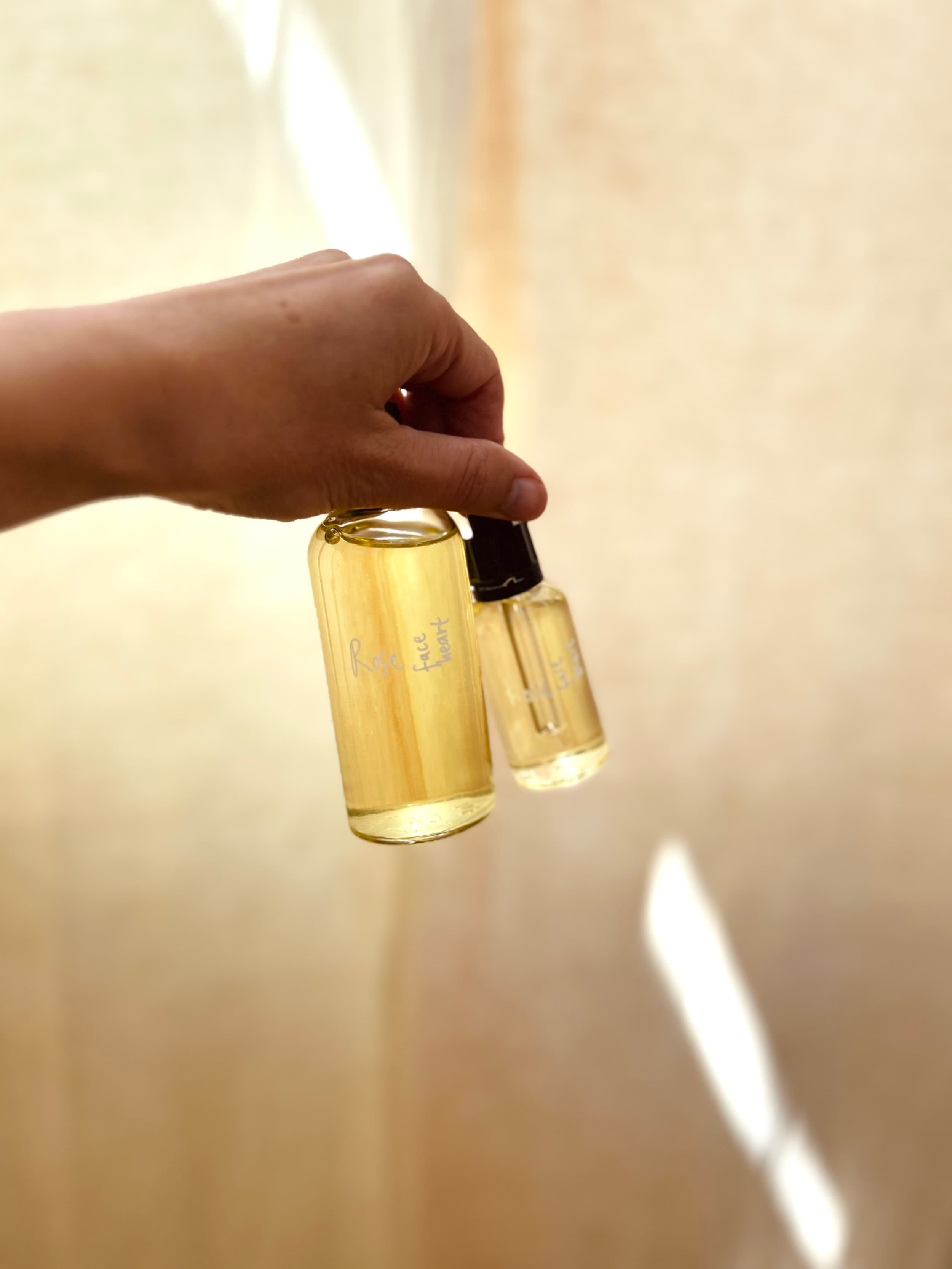
· Rose-infused oil applied to the skin cools, soothes and nourishes. A few drops on the temples or over the face and heart area offer both physical and emotional settling.
· Rose · hibiscus tea works from the inside. Hibiscus shares rose's cooling, Pitta-calming nature, adding its own depth and slight tartness. Together they make a tea well-suited to summer — and to any moment of accumulated heat: around menstruation or perimenopause, or when there is inflammation or irritability that doesn't have an obvious seasonal cause. Drunk at room temperature on a warm day, it refreshes without shocking the system.
These are not complicated rituals. Rose offers quiet settling, coolness, the sense of something restored.
references:
ancient Ayurvedic texts: Asthanga Hridayam and Sarangdhara Samhita
modern science: Smelling This One Specific Scent Can Boost The Brain's Gray Matter, ScienceAlert, August 2025. The study found that the posterior cingulate cortex — a region linked to memory and association — showed increased gray matter volume in participants who continuously inhaled rose scent. This area is known to shrink in people with Alzheimer's disease, suggesting a potential protective effect.