P A N E E R · recipe
Paneer, a fresh young cheese, is so simple to make and adds nourishing protein to a meal with vegetables. It is also so tasty in chapatis, pita bread or wrap.

Paneer brings the cooling qualities of dairy and the creaminess of cheese in a balanced way. In general, dairy products are considered to have nourishing, cooling, and lubricating properties. It is also important to note that while dairy is considered beneficial for many, our current modernized practice of keeping animals and producing dairy products varies greatly from historical practices. If you choose to consume dairy, I suggest sourcing organic dairy that is produced locally, by a small farm where animal wellbeing is a priority.
Since dairy is a highly nourishing food and heavy to digest, it is wise to consume small portions and add spices to your meal like ginger, cumin and black pepper. It’s also best consumed in autumn and winter when digestion is strongest.
In Ayurveda, paneer is considered particularly nourishing for the bones and joints, because of its high calcium, phosphorus and protein content. Paneer is low in fat and cholesterol compared to most other cheeses.
Paneer is most suitable for Vata and Pitta constitutions and may be too heavy for those with more Kapha in their nature.
ingredients
· 1 or 2 liters of whole milk (preferably unhomogenised, organic. If you can get raw milk from a local organic farm that is lovely). 1 liter of milk makes paneer for 1-2 people, 2 liters for 3-4 people
· 1-2 lemons
· a bit of oil (ghee, olive, sunflower, coconut)
· salt
tools
· 1 pan
· 1 extra pan or large bowl
· citrus press / squeeze by hand
· clean tea towel / cheese cloth spread in a colander, or a big enough sieve
· baking pan
method
· squeeze 1 lemon and set the juice aside
· bring the milk almost to a boil (when it starts foaming), best is to take your time and let the milk heat up slowly and keep your eye on it
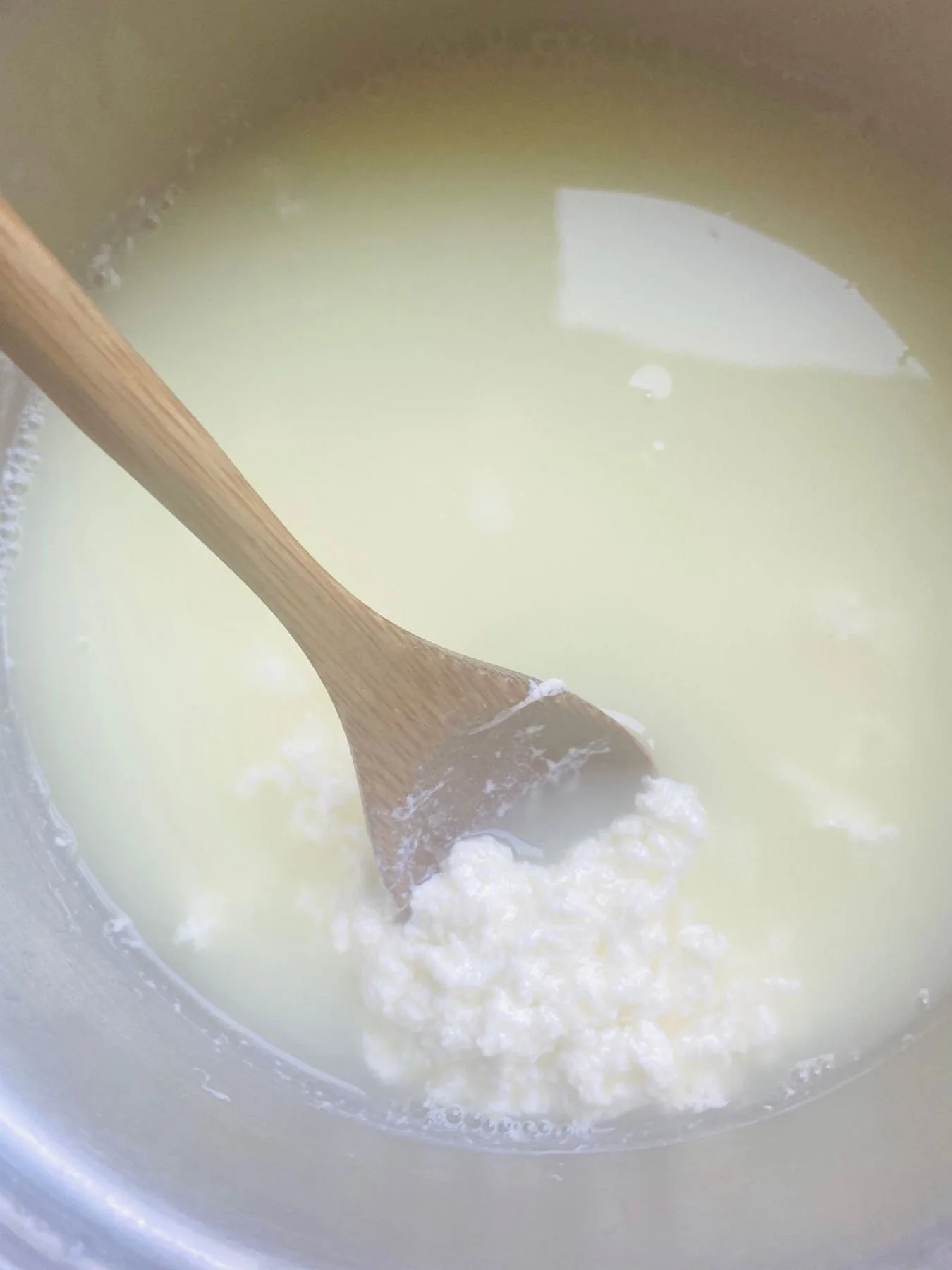
· take the pan of the heat, add the lemon juice to the hot milk and stir briefly. Watch if the milk solids start to slowly separate from the watery part (curdle). If yes, go to the next step. If not, you can consider giving it a few more minutes and/or adding some more lemon juice.
· let the milk and lemon juice rest for 10-15 minutes
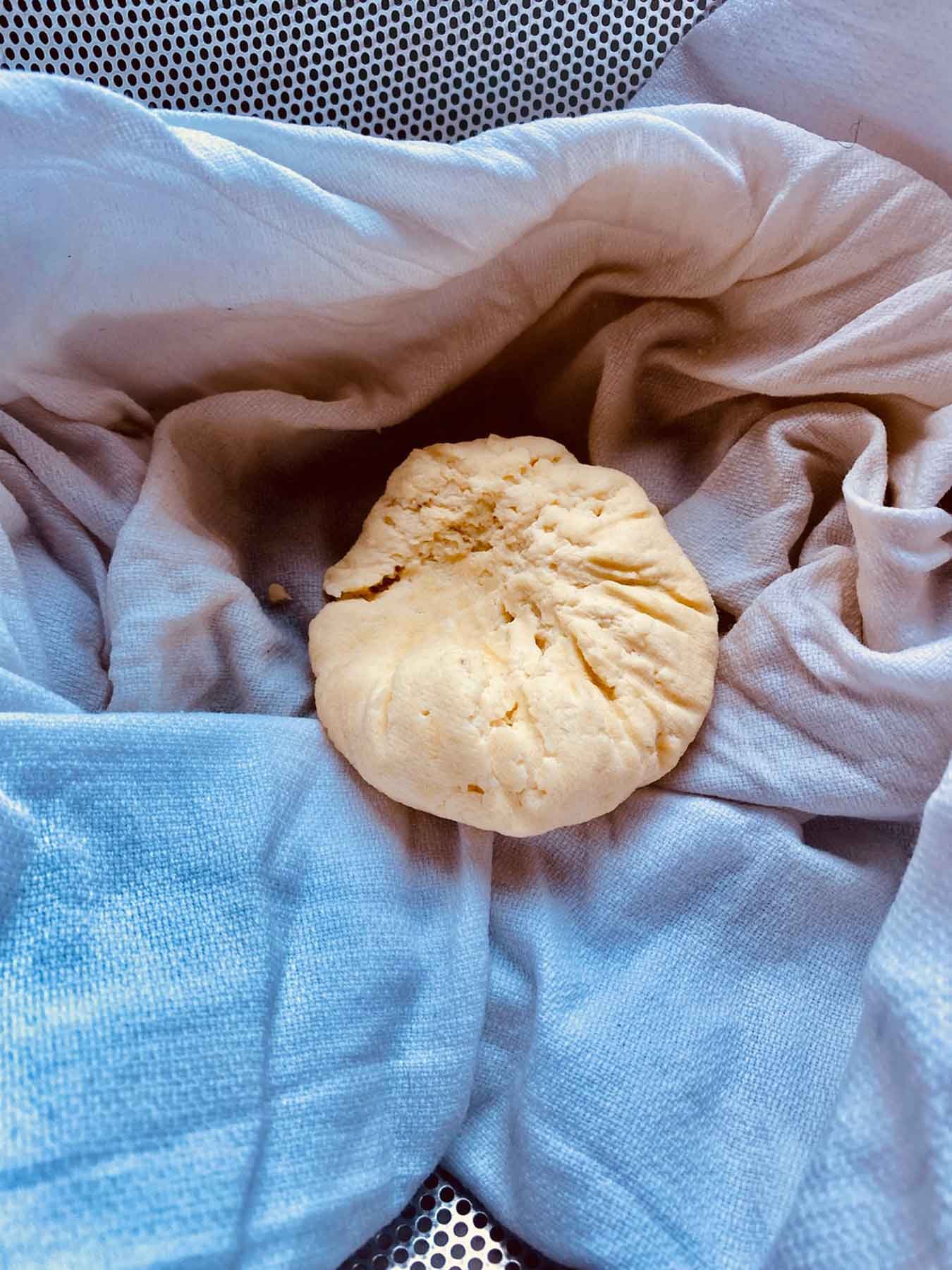
· now you are going to sieve the solids from the liquid. You can either lay the tea towel in a colander, or you can use a big sieve and hang this above another pan / bowl. When you pour the solids will stay behind in the tea towel / sieve and the liquid drips into the other pan / bowl
· leave for 5-10 minutes so the liquid all drips into the pan / bowl
· now you can transfer the paneer into a bowl/glass container and put it in the refrigerator till you’ll use it
· when ready to eat: crumble or cut the paneer in smaller pieces
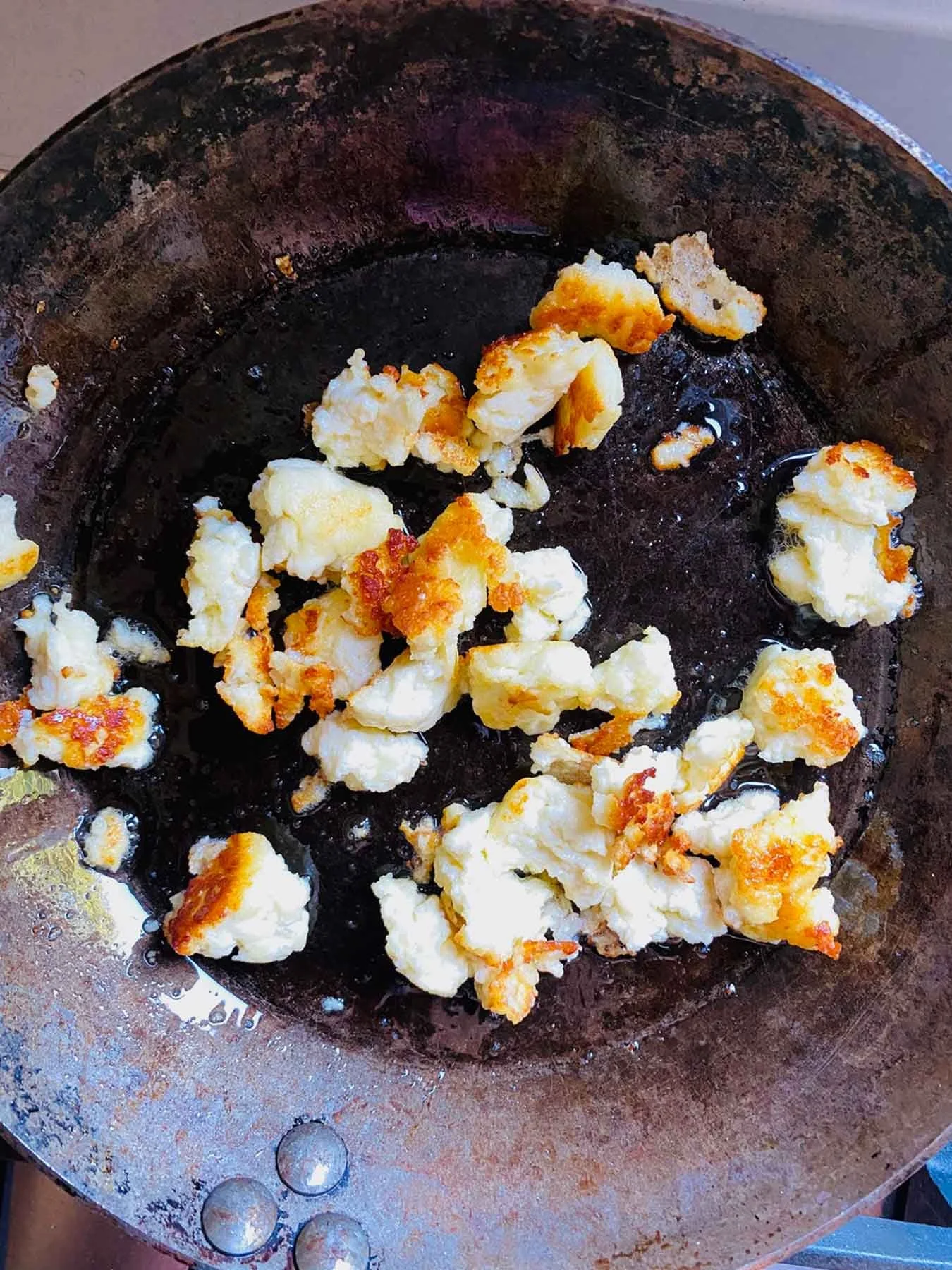
· heat some ghee or other oil in a baking pan
· fry the paneer pieces together with some salt for a few minutes, and turn
You can store the un-fried paneer until you’re ready to use it. It will last ± 4 days in the refrigerator. Personally I always eat it within 2 days.
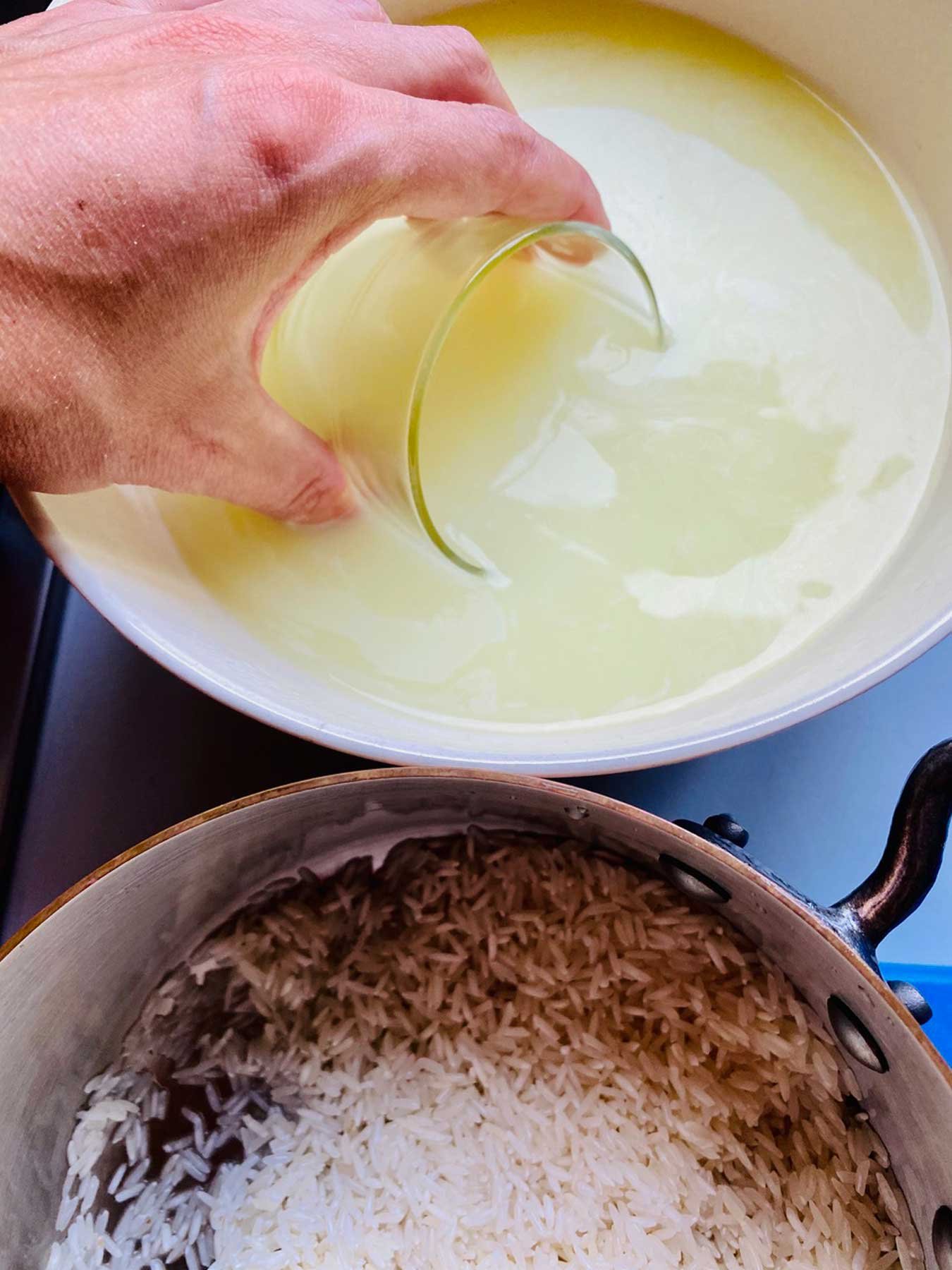
The leftover whey you can use for boiling your rice in. It will make it more nutritious and nourishing. You can store the whey for 1-2 days in the refrigerator.