R E S T O R I N G · F L O W · short exercise
It’s often the simplest postures that have the most profound effects. This is one of the poses we can’t be reminded of enough.
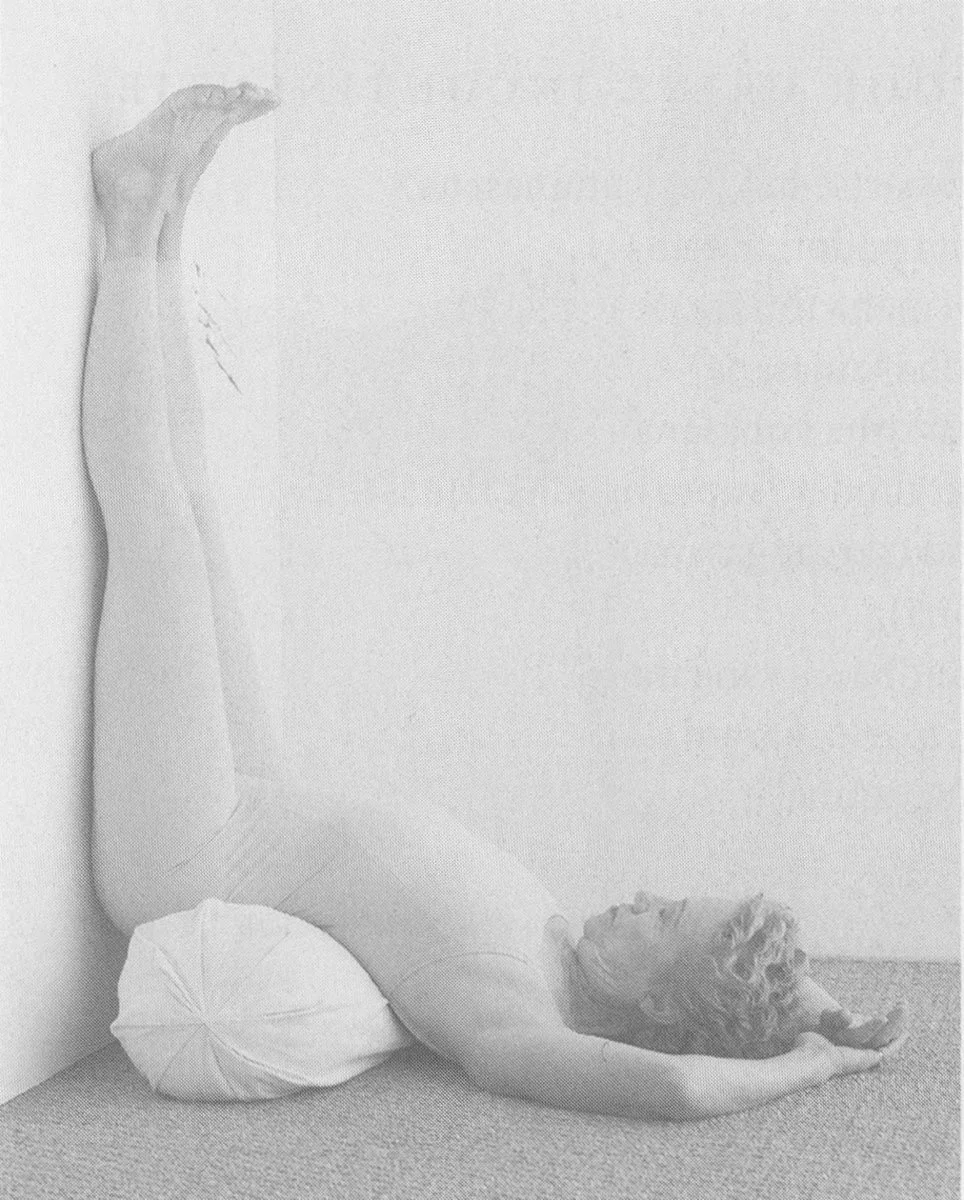
Appearing in yogic texts from around the 17th century, Legs Up the Wall—or Viparita Karani—is both a yoga posture and a mudra. Originally intended as a restful yet active asana, its name combines the Sanskrit word viparita, meaning “reversed,” and karani, meaning “in action.”
This pose is designed to reverse and rebalance the body—supporting the movement of fluids, blood, and energy. Because of this, Viparita Karani is considered not only a physical posture, but also a mudra: a gesture that works on the subtle body and its energy systems. At its core, the practice supports the preservation and balance of prana, or life force.
With your legs elevated above the rest of your body, gravity begins to work in a way it simply can’t during most of the day, when we are standing upright or sitting. Unlike more advanced inversions such as headstand or shoulder stand, this pose allows you to access the benefits of inversion without straining the neck or requiring extensive practice.
Some of the key benefits include:
Calms and quiets the nervous system
Supports balance in the endocrine system
Enhances venous circulation
Reduces fluid retention in the legs and feet by supporting the lymphatic system. The lymphatic system doesn’t have a pump like the circulatory system, so it relies on gravity and movement to function effectively
This makes Legs Up the Wall an especially supportive pose for tired legs, improving circulation and calming the mind—particularly after long days of standing, or during Spring, when Winter may have created a sense of stagnation in the body.
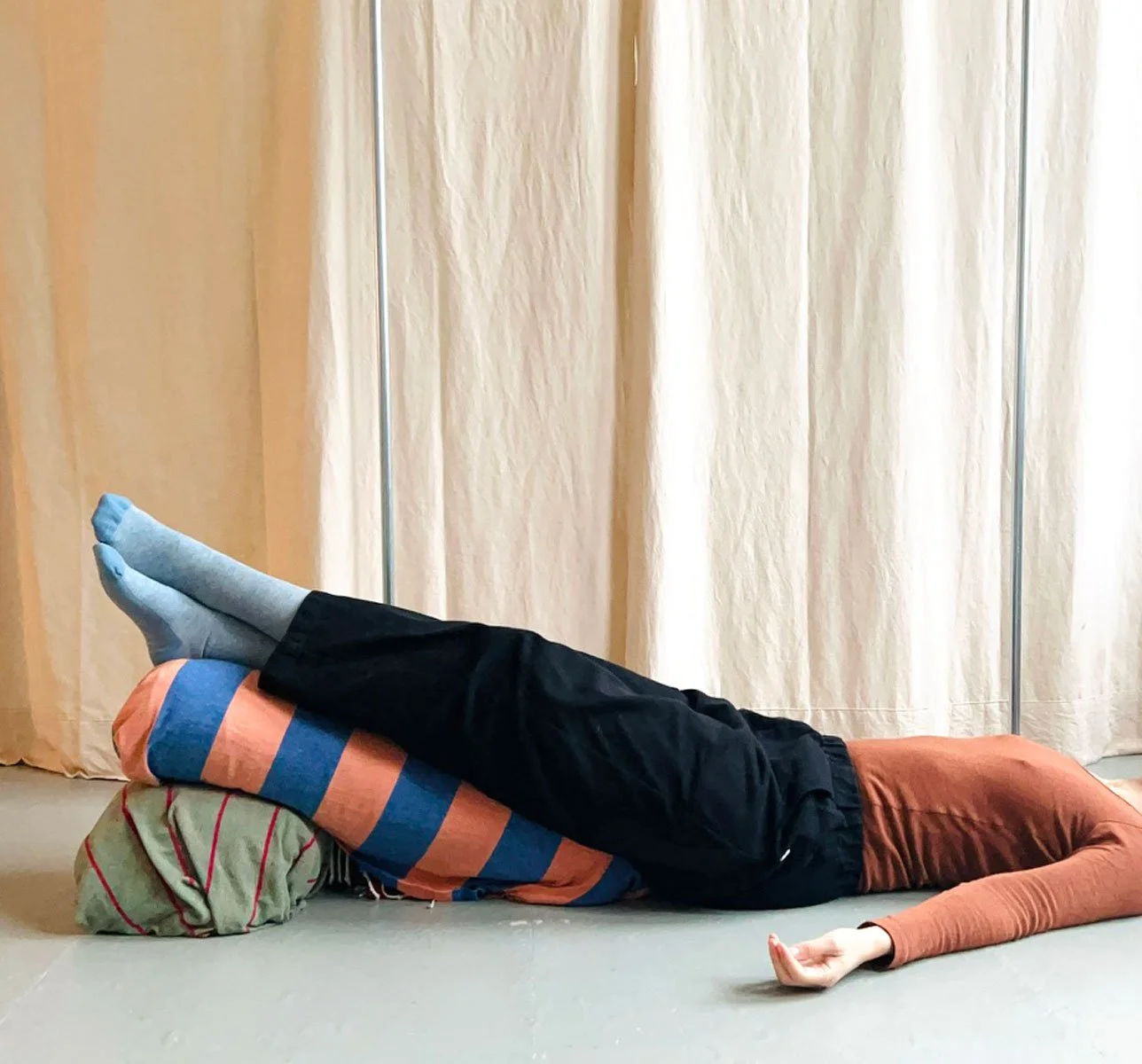
If Legs Up the Wall feels challenging, you can do this adjusted variation (see 2nd image), with the legs resting at a gentle diagonal rather than vertically, supported by an elevated pillow. This makes the pose more restorative and accessible, allowing it to be practiced comfortably in a wider range of moments and for different bodies.
Steps to practice Viparita Karani (Legs Up the Wall / Half Candle Pose)
Place a folded blanket or pillow under your hips to receive the full benefit of the pose. You can fold a blanket into a large square, then again into thirds, and position it about 15 cm away from the wall. Adjust the height so it feels comfortable and supportive for your body.
Sit sideways next to a wall. Gently lower your shoulders and head to the floor as you lie down on your side, then roll onto your back and extend your legs up the wall. Your feet can be hip-distance apart, or whatever distance feels most comfortable.
Adjust your position by scooting your hips slightly toward the wall. Your sitting bones don’t need to touch the wall—find a position that allows your legs to relax fully.
Rest your arms by your sides with your palms facing up. Soften your shoulders and allow your legs to be fully supported by the wall. Release all effort. You may feel your femurs sinking into the hip sockets and your spine gently lengthening. Settle into stillness and breathe here for at least 10 minutes.
To come out of the pose, slowly bend your knees and roll onto your side. Pause for a few breaths, then use the support of your arms to gently press yourself back up to a seated position.
Precautions
Keep the following in mind when practicing this pose:
Ensure your lower back feels comfortable. If needed, add extra support under your hips.
Avoid practicing inversions during menstruation.
Keep your neck in a neutral position and avoid turning your head while in the pose.
If you feel any discomfort, gently lower your legs and rest.
Consult a doctor if you have glaucoma, high blood pressure, or serious neck or back conditions.
Image 1: Viparita Karani with a thick pillow. Photograph: David Martinez.
Image 2: Adjusted legs up te wall; the legs are more diagonal than up: with the legs resting at a gentle diagonal rather than vertically, supported by an elevated pillow. This makes the pose more restorative and accessible, allowing it to be practiced comfortably in a wider range of moments and for different bodies.
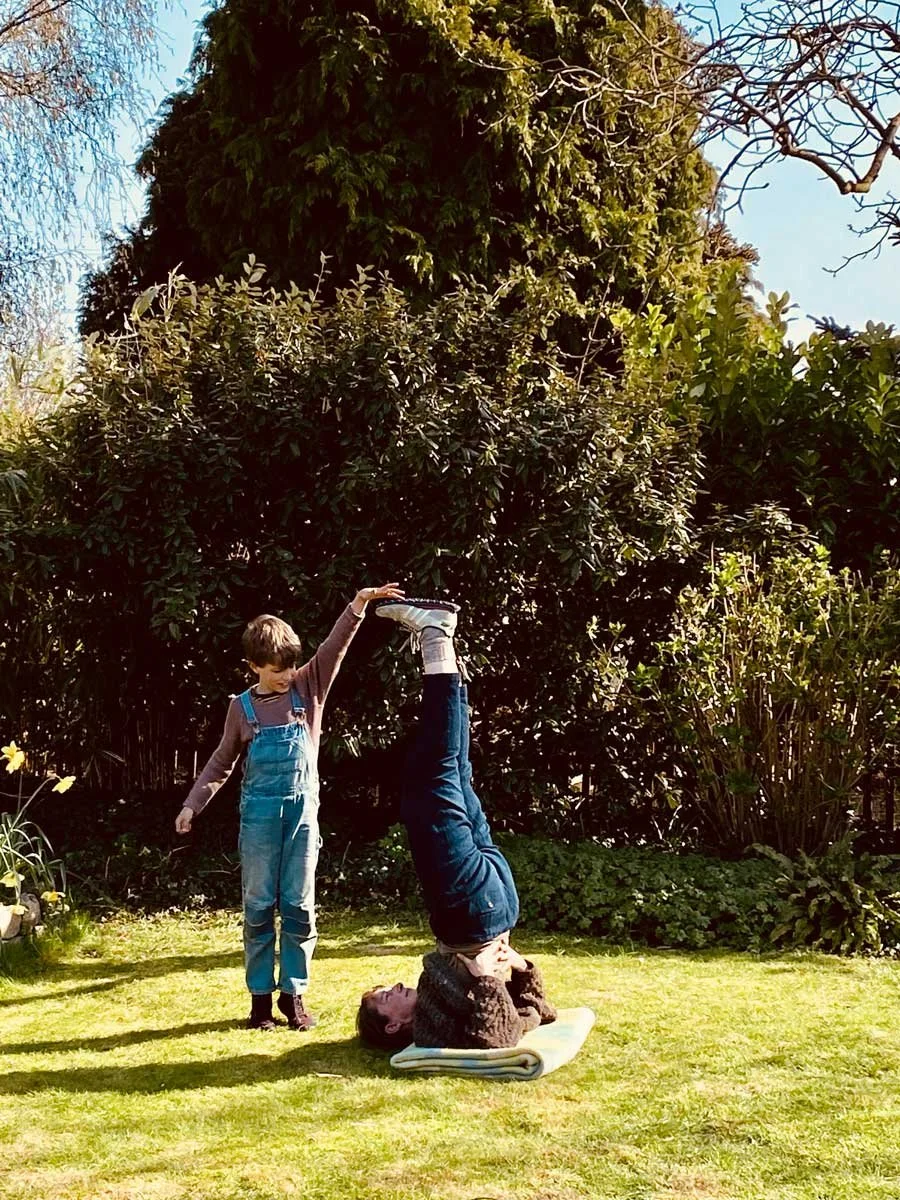
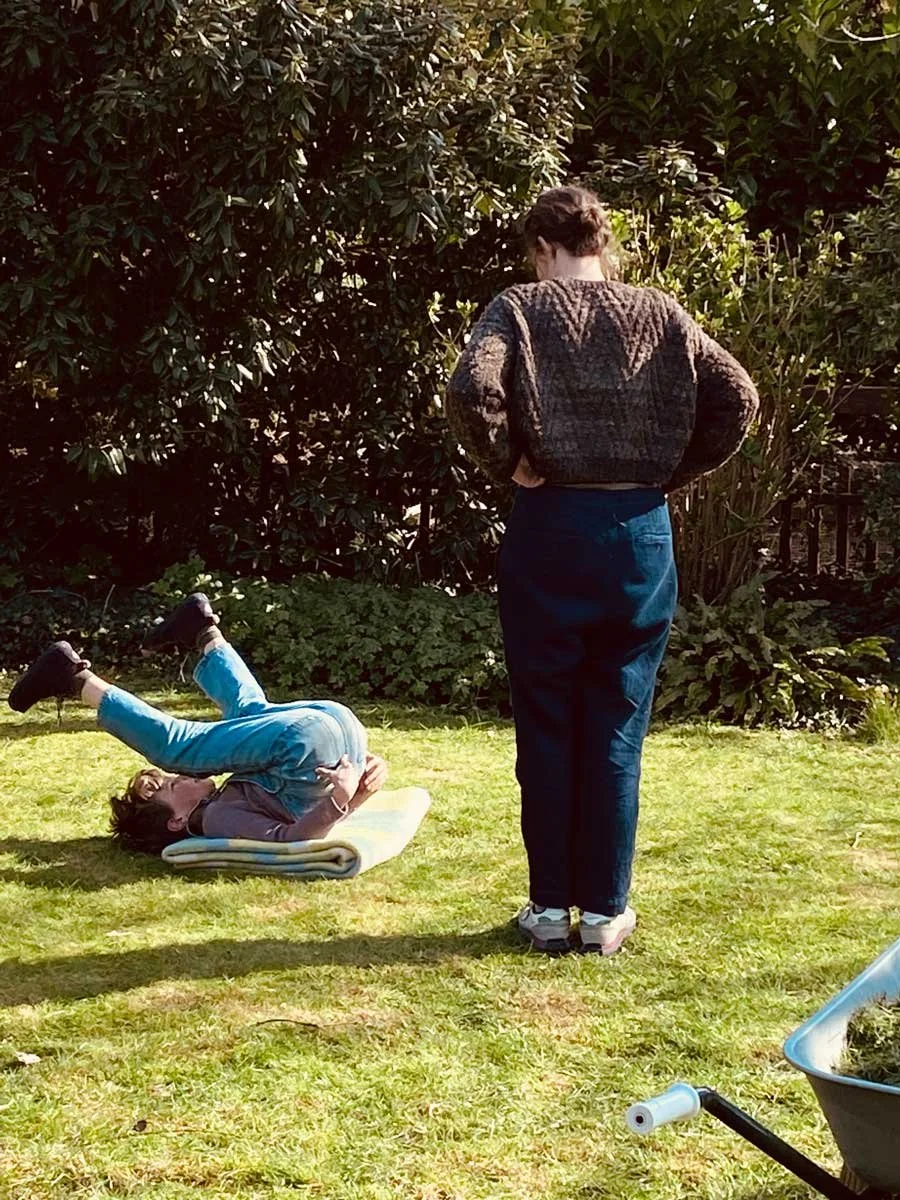
Image 3 + 4: Me and our son trying shoulder stand / candle pose or Sarvangasana in 2021 at our garden after cutting the grass. This is a more advanced inverted pose in yoga and not suitable for all body types because of the angle of the neck. If you have neck injuries or haven’t practiced this with a teacher before, stay with legs up the wall or elevated legs on a pillow.