The · Q U I E T · of · N U T S
Before bed, a few almonds go into a bowl of water. By morning they have softened, and so has the start of the day. A gentle guide to soaking, roasting and storing nuts, with an Ayurvedic view on who they suit and when.
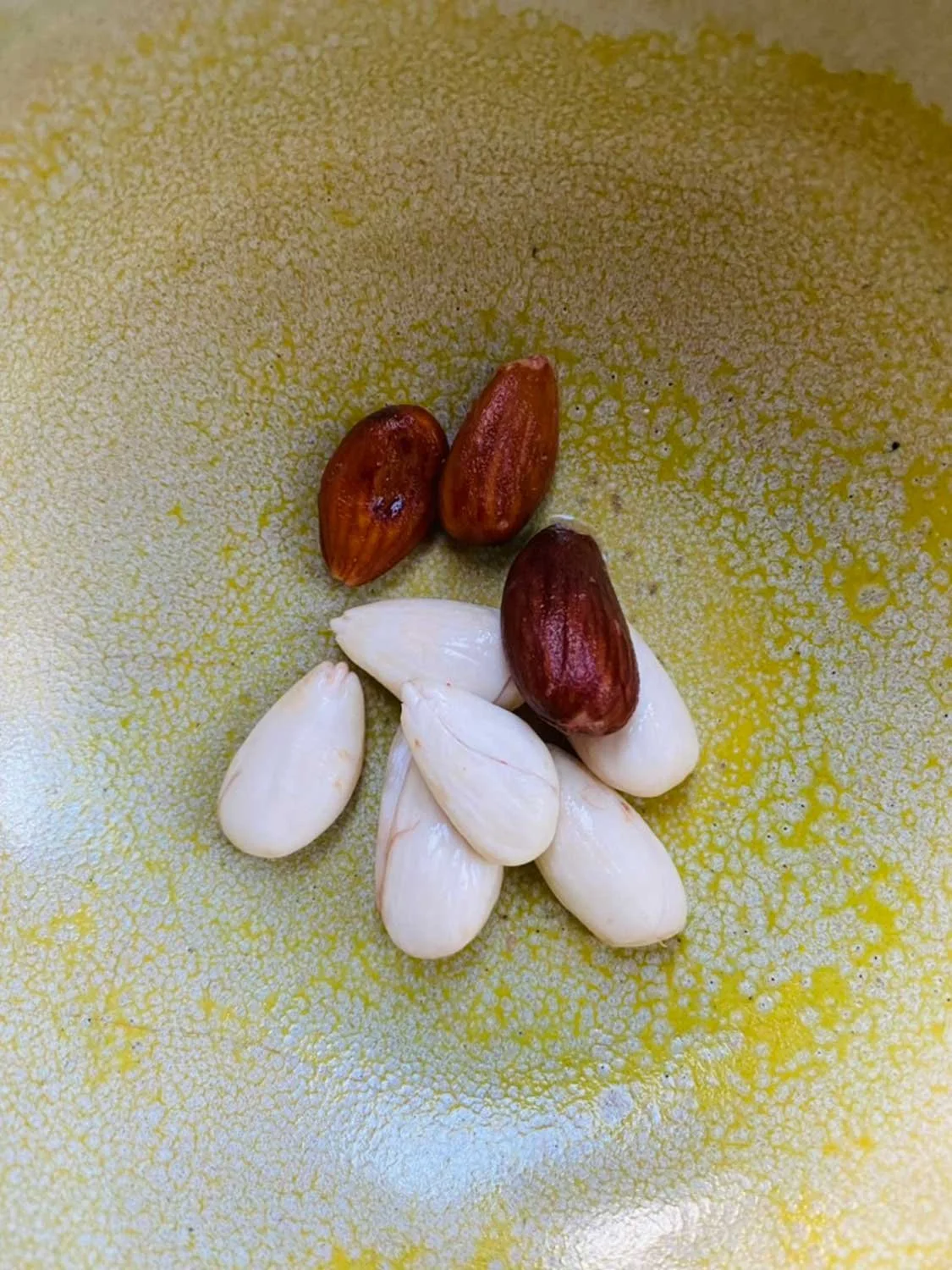
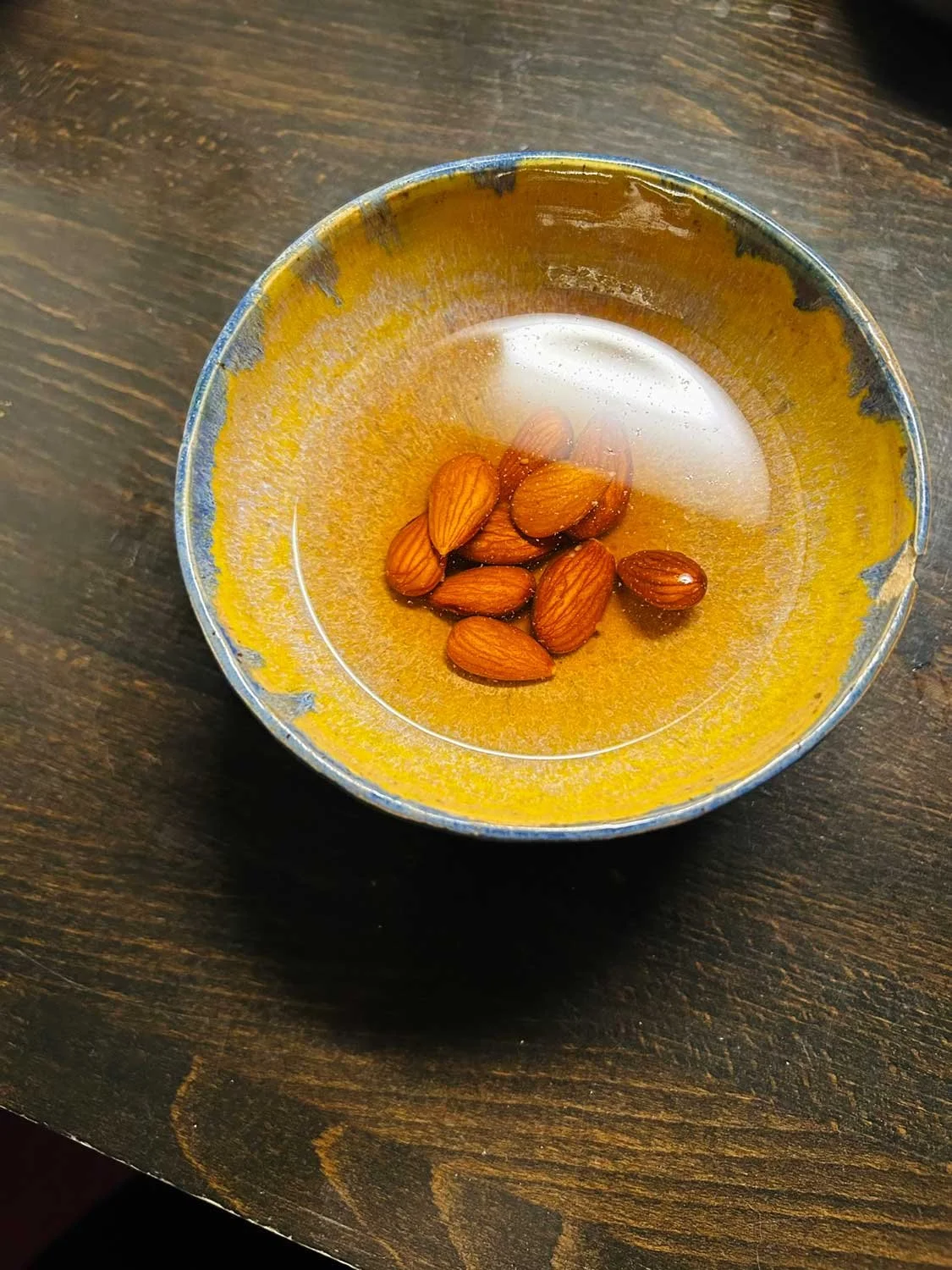
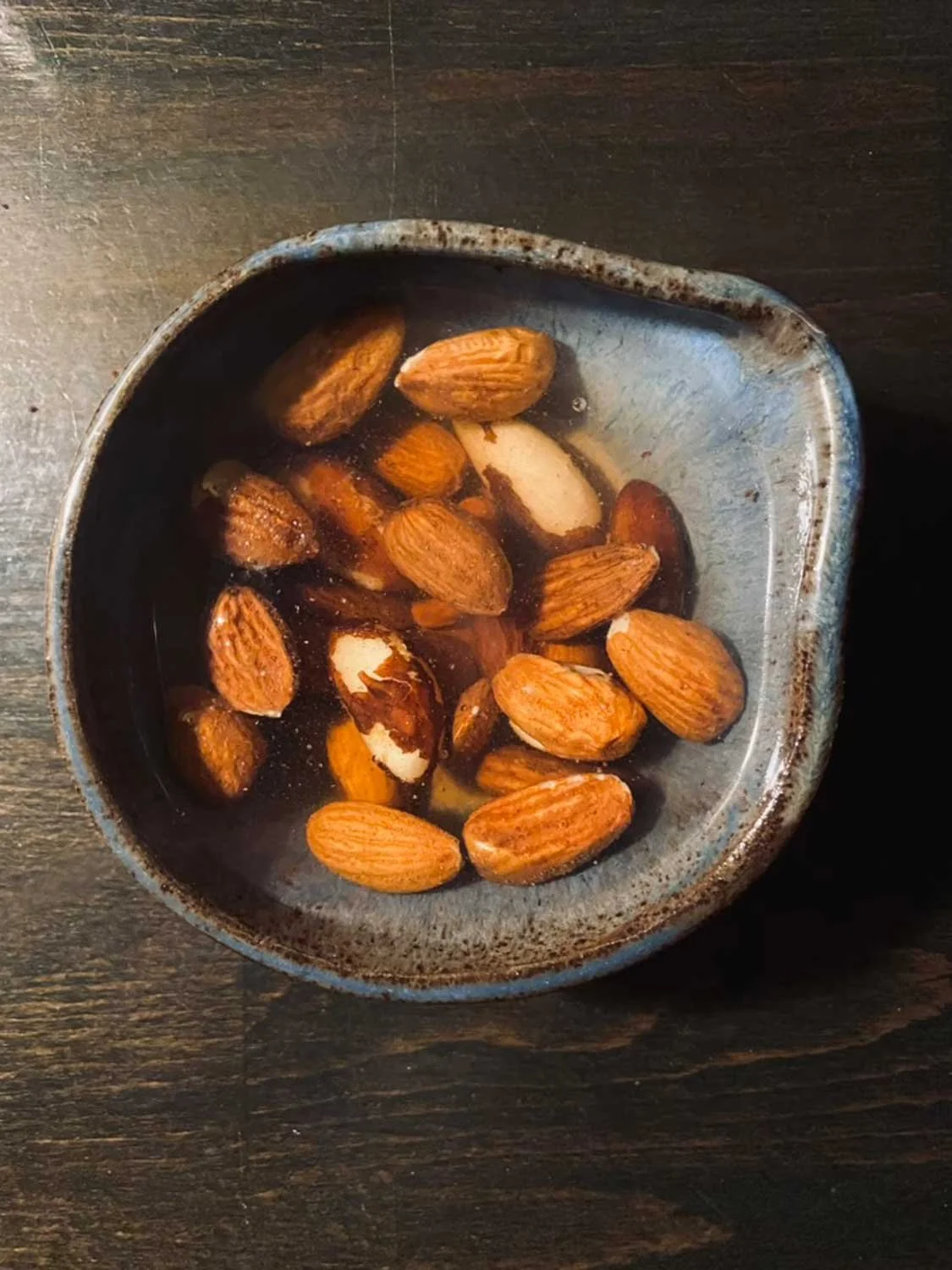
There's a small kitchen ritual I've come to love: before bed I put five to ten almonds in a bowl, cover them with water, and leave them on the counter. By morning they've changed. They're plumper and softer, and the bitter edge has mellowed. It takes very little effort; the transformation happens while I sleep.
In the morning I slip off the skins. That small act joins the two ends of the day: the quiet preparation before bed, and the first moment after waking. What began as habit becomes something more meditative, what is often called sadhana, a daily practice done with attention.
Where nuts begin
A nut is a seed: oil, protein, minerals and stored energy, wrapped in a skin and shell that protect it until conditions are right to grow. Many nuts ripen in late summer and autumn, and when they're first harvested they're a different food from the one we know. Fresh walnuts, for instance, are moist and tender, with a milky, almost sweet flavor, and fresh almonds are soft and juicy, with a delicate crunch.
They're delicious, but it's hard to eat many of them. The thin skin of a fresh walnut is rich in tannins, which are astringent and can leave the mouth dry or sore. They're fragile, too. With so much moisture, fresh nuts spoil quickly.
That's why we dry them. Removing the moisture keeps mold and rancidity away, so nuts can be stored for months. Drying also deepens the flavor and gives them their familiar bite. But something is lost in the process. A dried nut is dense, dormant, and dry, like a seed waiting out the winter.
Why soaking?
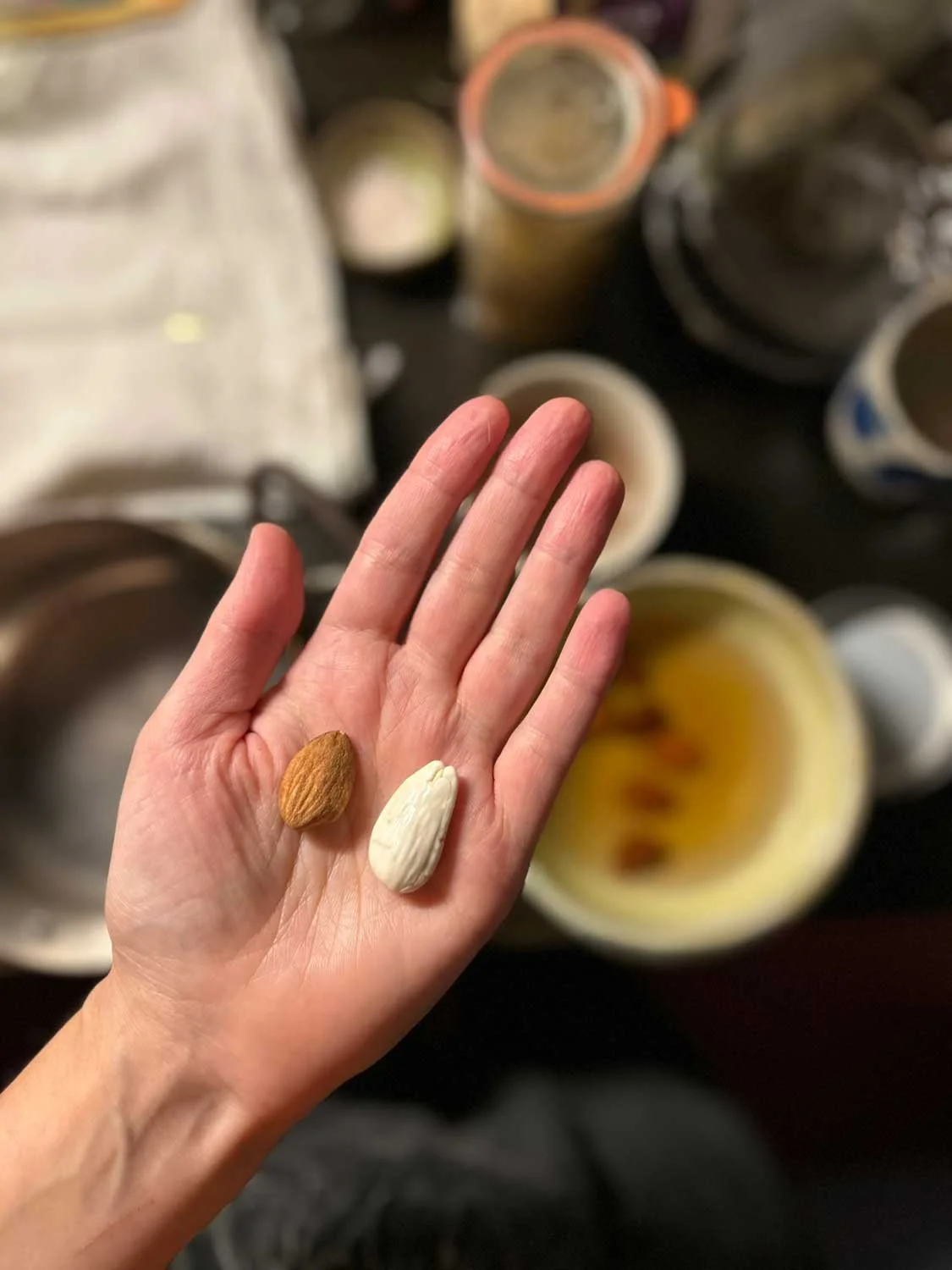
Soaking is a gentle way back. Water restores some of the softness and moisture the nut had at harvest, and the nut begins to wake up. It's a small return to how the nut was before it was dried, on your own schedule. The water the nut absorbs is significant, see the difference in size between the dried almond and the soaked one in the second image.
Beyond that, people soak for a few practical reasons. (I focus here on almonds and walnuts, which are the nuts most often soaked, but not every nut needs it. The guide below says which.)
Texture. Soaked cashews blend into silky cream for sauces, dressings, and desserts, and soaked almonds make smoother milk. Cashews are soaked more for texture than for digestion.
Flavor. Raw nuts can carry a faint tannic bitterness, especially in the skins of almonds and walnuts. Soaking softens it and lets the sweeter, rounder notes come forward.
Digestibility. Nuts are a quiet source of minerals, such as magnesium, zinc, iron and copper. They also contain phytic acid, which can hold onto some of these minerals so the body takes up less of them. Soaking may reduce it a little, and many people find soaked nuts gentler on the stomach.
The Ayurvedic view: nuts and vata dosha
Ayurveda has long favored soaking nuts, and its reasoning is beautifully simple.
Ayurveda describes three doshas, or constitutional energies; vata is the one made of air and space. Its qualities are dry, light, cold, rough, and mobile. When vata is balanced, we feel creative, lively, and flexible. When it runs high, we might feel anxious, scattered, cold, or dry, with dry skin, restless sleep, and irregular digestion.
Nuts are a classic vata-soothing food. They're oily (snigdha), heavy (guru), and nourishing (brimhana), which is the opposite of vata's dry, light nature. They ground us. But dried nuts are also dense and can be hard to digest, especially if your digestive fire (agni) is delicate, as it often is when vata is high.
This is where soaking comes in. Water adds moisture and softness, and it pre-digests the nut a little, so you get the grounding, nourishing qualities without making your digestion work as hard. In Ayurvedic terms, soaking makes nuts more snigdha (unctuous, moist) and easier to assimilate.
The most traditional example is the soaked almond. The practice is to soak a few overnight, slip off the skins in the morning, and eat them slowly as a first food of the day. The skins are considered harder to digest and slightly heating, which is why they're removed. The result is said to nourish the body's deeper tissues and build ojas, the subtle essence of vitality and resilience.
Eating with the seasons
Another thing to consider is season, since each season stirs a different dosha.
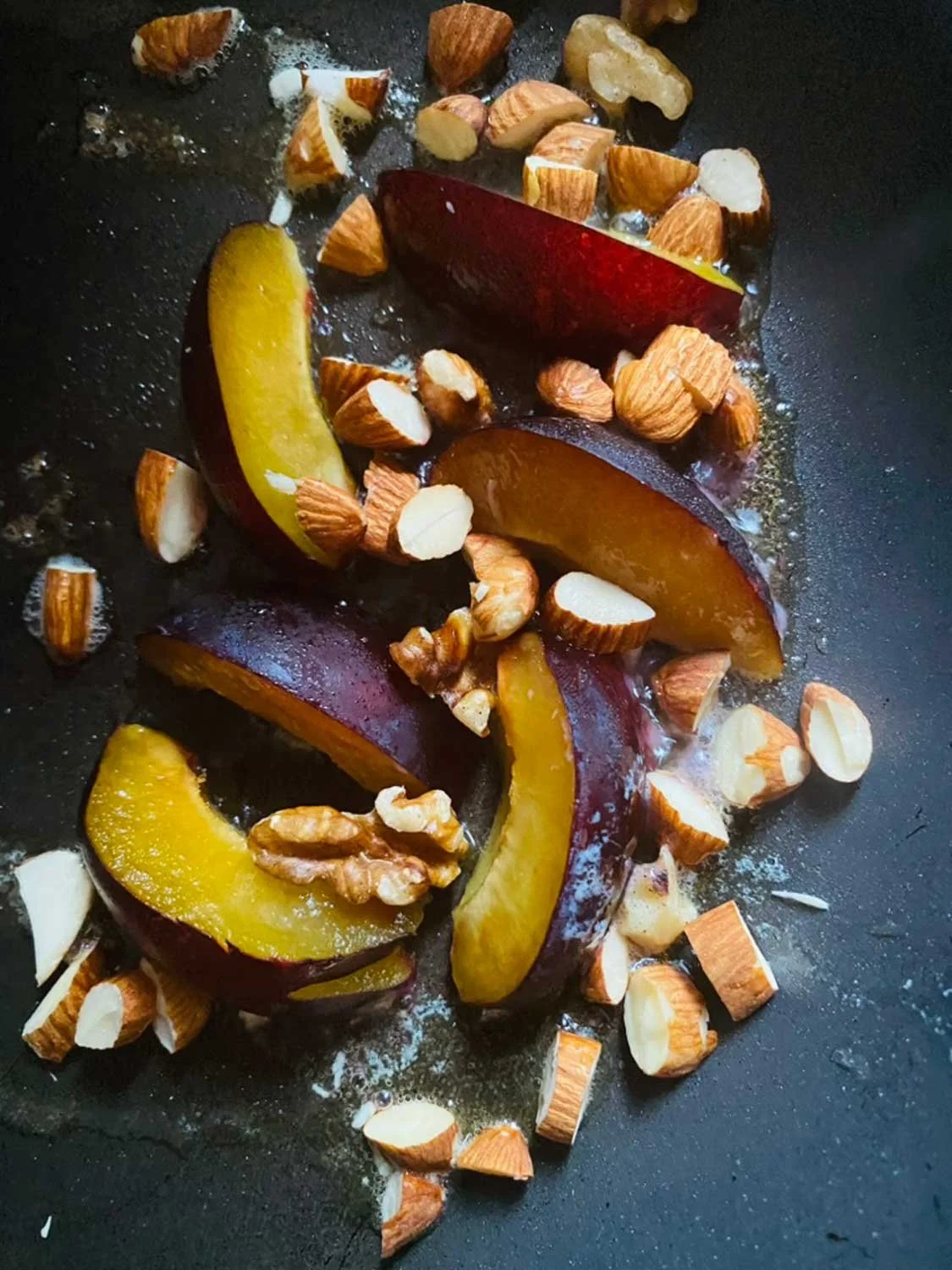
Autumn into early winter is vata season. The air turns cool, dry, and windy, and vata naturally rises with it. This is the time for soaked nuts. Pair them with warm, moist, grounding foods: porridge with soaked almonds and cinnamon, a warm almond milk with cardamom and a little ginger, or soaked walnuts stirred into stewed apples.
Late winter into spring is kapha season, which is heavy, damp, and slow. Nuts are already heavy, so keep portions small, go easy on the richest ones such as macadamias and pecans, and favor lighter, drier options: a few almonds, or pumpkin and sunflower seeds, perhaps lightly dry-roasted rather than soaked.
Summer is pitta season, hot and intense. Soaked and peeled almonds are fine in small amounts, but go easy on salted or roasted nuts, which add more heat.
None of this is a rulebook. It's a way of paying attention: noticing the weather outside and in your body, and letting that guide what you eat.
Soaking or roasting?
Soaking isn't the only way to prepare a nut. Think of the two as opposites. Soaking moistens, softens, and cools the nut, which is why it suits vata. Roasting dries, lightens, and warms it, which suits kapha, who benefit from a lighter, drier nut.
If vata is high, roasting can be too drying, unless the nuts are gently roasted with a little ghee or oil and warming spices like cinnamon or cardamom. If pitta is high, heavy roasting and salt add heat, so soaking or a very light roast is kinder. Raw, unsoaked nuts are the unmodified version, best kept for those with strong digestion and eaten in modest amounts.
Traditionally, many people prefer to prepare their nuts in one of these two ways rather than eat them dried and raw. See it as a starting point and let your own body tell you what works.
Freshness
A note on shop-bought roasted nuts: the oils in nuts go rancid with time, heat, and light. A rancid nut tastes bitter, sharp, or a little like old paint, and it's best thrown out rather than soaked or roasted back to life. Roasted nuts from a shop have often been sitting for a while, so when you can, buy raw nuts and roast them yourself in small batches. Store them somewhere cool, dark, and airtight, and keep the more delicate ones, like walnuts, pecans, and most seeds, in the fridge or freezer.
When nuts feel too heavy
Because nuts are guru and brimhana, they don't suit everyone at every moment. If nuts leave you feeling heavy, bloated, or sluggish, even when soaked, they may simply be too much for you right now, or your digestion may not be strong enough for them at this point. That is not a verdict, and it can change with the season, your routine, when digestion improves. This is where a personalized consultation can help: to look at your digestion, your dosha balance, and your circumstances, and to find out which nuts, seeds, and preparations suit you.
This is a traditional perspective, offered as inspiration rather than medical advice. If you have nut allergies or a health condition, listen to your own body and your doctor.
A simple guide
Not every nut needs soaking. Some gain a lot from it, some only change in texture, and some are best left alone. To soak, cover the nuts with room-temperature water, with 3 cm to spare, since they'll swell. A pinch of salt is optional but nice. Then leave them be.
After soaking, drain and rinse well. Soaking water isn't meant to be reused.
Soaked most often
Almonds: 8 to 12 hours, then slip off the skins.
Walnuts: 4 to 8 hours (the water will turn brown, which is normal).
Soaked mainly for texture
Cashews: 2 to 4 hours, for blending into creams, sauces, and milks (any longer and they turn slimy). They are among the milder, less fatty nuts.
Hazelnuts: 8 to 12 hours, mostly for hazelnut milk or spreads. Otherwise they're usually eaten raw or lightly roasted.
Soaked occasionally
Pecans: 4 to 6 hours. Some people prefer them lightly toasted instead, since they are very oil rich.
Usually eaten as they are, or lightly roasted
Pistachios: already soft and mild. Eaten from the shell.
Macadamias: buttery and the richest of all, so a few is plenty.
Brazil nuts: very rich, and usually eaten in small numbers, a couple at a time.
Pine nuts: best lightly toasted, for salads, pesto, and grains.
Chestnuts: the exception to the rule. They're starchy and low in fat, and they're cooked or roasted rather than eaten raw.
A word on richness. Nuts differ a good deal in how much fat they hold. As a rough guide, macadamias, pecans, Brazil nuts, pine nuts, and walnuts are the richest, the most guru, and heavy for digestion. Hazelnuts and almonds sit in the middle, and cashews and pistachios are lighter.
Using and storing them
Use soaked nuts right away in nut milks, creamy sauces, or porridge, or just eat them as they are. They'll keep in the fridge for about three days in an airtight container.
A small invitation
Soaking is a lesson in slowing down. Nothing about it is urgent, and the best part happens while you're not looking. As the days grow cooler and the wind is drying us, it is a great time to start with soaking a small bowl of almonds, and see how grounded you feel tomorrow.
images: Chala Kala